


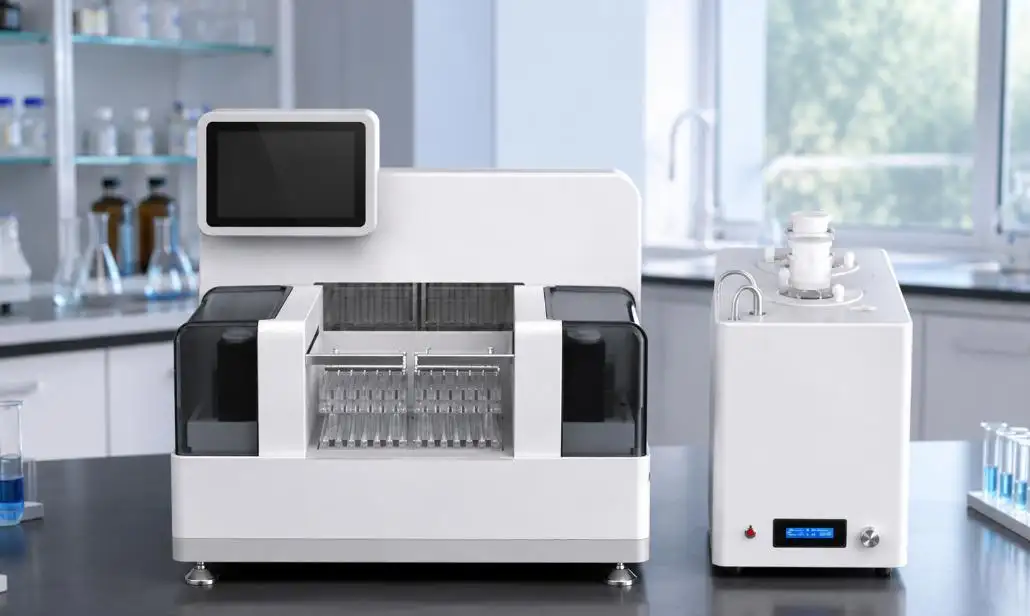

How a Vertical Franz Diffusion Cell Tester Supports Skin Permeation Studies
2026-08-22


Understanding Skin Permeation Barriers in Pharmaceutical Research
Creating formulations for topical and transdermal drug products requires more than estimating the rate of release of the active ingredient. The formulation must enable the drug to penetrate the skin barrier, remain in the skin to establish a concentration gradient, and perform the intended delivery function.
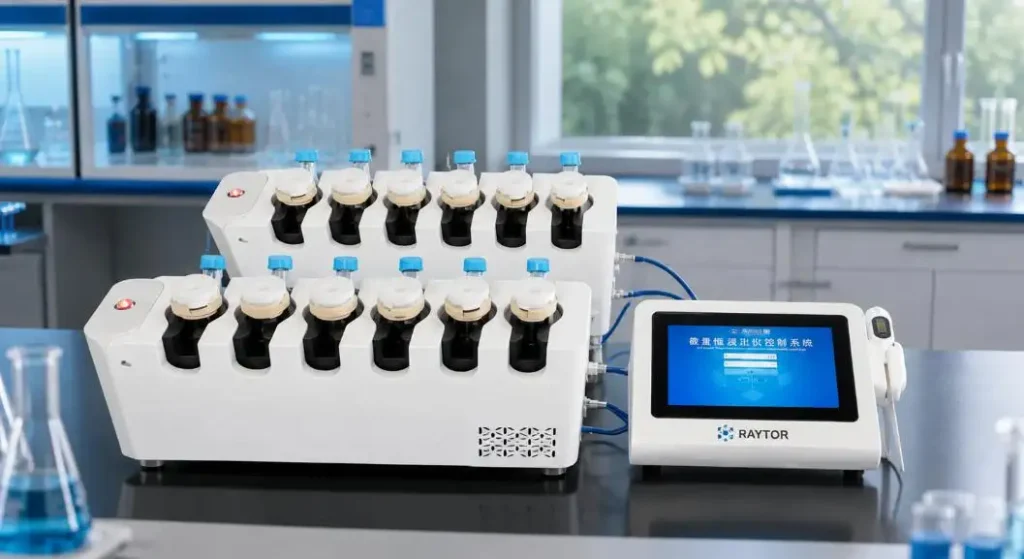
This is the primary reason a Vertical Franz Diffusion Cell Tester has become an essential analytical tool for pharmaceutical research and development. The Vertical Franz Diffusion Cell Tester offers a controlled, in-vitro model for the assessment of drug permeation for the following drug products:
•Creams and ointments;
•Gels and emulsions;
•Transdermal patches;
•Semi-solid pharmaceutical formulations.
In comparison to conventionally used dissolution methods, where the primary concern is the assessment of the drug release into the medium, the Vertical Franz Diffusion Cell Tester offers a membrane barrier that separates the donor formulation and the receptor medium. It, thus, offers a means to assess the entire transport process, which includes the rate of diffusion, total permeation, and the performance of the formulation.
For laboratories developing topical products, the key question is not only "how much drug is released," but also "how effectively does the drug move through a skin-like barrier?"
How a Vertical Franz Diffusion Cell Tester Works for Skin Permeation Studies
A Vertical Franz Diffusion Cell Tester operates based on controlled diffusion principles.
The system consists of:
•Donor chamber: Allows placement of formulation to be tested.
•Membrane interface: Be used to indicate the barrier in replacements of the donor and receptor chambers.
•Receptor chamber: Holds the receptor medium and collects permeated compounds.
•Heating and stirring unit: Allows for the control of all important variables of the study.
In a permeation study, drug molecules cross from the donor formulation to the receptor medium by permeation through the membrane. Samples withdrawn at different time intervals can be collected to determine the permeation profile.
Permeation results are influenced by a number of interrelated factors. Therefore, a good vertical Franz diffusion cell tester provides control over multiple factors.
| Control Variable | Effect on Testing Results |
| Stability of temperature | Affects solubility and diffusion of drug |
| Uniform stirring | Keeps receptor medium constant |
| Position of membrane | Determines path of effective diffusion |
| Bubbles | Assures complete contact between membrane and medium |
Why Temperature and Stirring Control Determine Data Reliability
Skin permeation studies are very sensitive to changes in the environment. A change in temperature or movement of the receptor medium can result in changes to the diffusion curve.
Temperature Control Maintains Relevance to Physiological Conditions
The temperature of the receptor medium is usually adjusted to be close to the temperature of the skin surface. A stable temperature helps to minimize changes in the following:
•Solubility of API
•Permeability of membranes
•Viscosity of medium
•Diffusion of molecules
Raytor's Vertical Franz Diffusion Cell Tester has a heating unit that provides temperature stability and accurate control of temperature from room temperature to 55°C (±0.5°C). This provides a stable environment for researchers when evaluating topical and transdermal formulations.
Stirring Assures Constant Drug Distribution
The receptor chamber has to be continuously stirred to ensure constant concentration of the drug.
Insufficient stirring may result in:
•Local concentration gradients
•Boundary layer phenomena near the membrane
•Reduced reproducibility between experiments
Raytor's system includes built-in stirring with a stirring speed of 200-900 rpm and a speed deviation of less than ±10% to allow laboratories to establish steady-state hydrodynamic conditions in permeation studies.
The relationship between these parameters is:
Stirring Stability → Receptor Medium Uniformity → Diffusion Behavior → Permeation Data Consistency
Selecting the Right Vertical Franz Diffusion Cell Tester for Different Research Applications
Different diffusion systems solve different testing problems. Selecting equipment requires understanding the purpose of the study rather than only comparing specifications.

Vertical Franz Diffusion Cell Tester vs. Immersion Cell Systems
| Comparison | Vertical Franz Diffusion Cell Tester | Immersion Cell System |
| Test structure | Donor and receptor compartments separated by membrane | Sample directly exposed to medium |
| Main application | Skin permeation and topical formulation evaluation | General release studies |
| Barrier simulation | Better represents membrane transport | Limited barrier simulation |
| Research value | Provides permeation kinetics | Mainly release information |
Vertical Franz Diffusion Cell Tester vs. Flow-Through Cell Systems
| Comparison | Vertical Franz Diffusion Cell Tester | Flow-Through Cell |
| Medium movement | Static receptor medium with stirring | Continuous medium circulation |
| Typical application | Skin permeation, creams, gels, patches | Complex release and transport studies |
| System complexity | More compact laboratory setup | Requires additional flow control |
A Vertical Franz Diffusion Cell Tester is often preferred for formulation screening because it provides a direct way to compare different formulations under controlled diffusion conditions.
Key Technical Considerations When Evaluating a Vertical Franz Diffusion Cell Tester
Prioritizing equipment selection in terms of how the design facilitates reliable testing as opposed to an analysis of specifications is recommended.
Diffusion Cell Design and Replicability
Ultimately, the design of the diffusion cell dictates the following parameters:
•Size of the diffusion area
•Consistency in sample loading
•Stability of volume of the receptor
•Expt repeatability
Raytor's system includes a six-position vertical diffusion cell arrangement with manual sampling, thereby allowing researchers to perform permeation studies in parallel while minimizing the requirement for laboratory space.
Bubble Formation and Membrane Contact
Air bubbles are the most common reason for unreliable results in Franz diffusion. A membrane-receptor contact bubble can result in an effective contact area reduction and distortion of the permeation data.
Raytor has introduced a filling point that minimizes bubble formation and therefore sustains consistent membrane-medium contact.
Common Technical Mistakes in Skin Permeation Testing
Mistake 1: Misunderstanding IVRT and IVPT
These two types of experiments are aimed at the evaluation of topical formulations, but their focus is on the following aspects, respectively.
•IVRT: concentration-time data
•IVPT: transport through a membrane or skin model
The Vertical Franz Diffusion Cell Tester is designed primarily for permeation studies on transport behavior.
Mistake 2: Ignoring the Importance of Membrane in Experimental Setup
In such studies, membranes play a much bigger role than just separators. The thickness, permeability, and the active ingredient interaction all affect the results.
Researchers must consider the following when choosing a membrane material:
•Properties of the drug
•Type of formulation
•Type of research
Mistake 3: Evaluating Equipment Only by Purchase Price
Long-term reliability of a pharmaceutical laboratory relies on:
•Stable temperature control
•Repeatable stirring performance
•Easy operation
•Easy maintenance
•Technical support
Supporting the Application of USP <1724> and Laboratory Qualification
A Vertical Franz Diffusion Cell Tester is commonly used to determine the in vitro release and permeation of semi-solid drug products. USP <1724> describes performance testing of products in the form of creams, gels, and ointments.
Prior to routine tests, the following should be considered:
•Installation Qualification (IQ)
•Operational Qualification (OQ)
•Calibration verification
•Method validation
A suitable system should also support the necessary documentation needed for laboratory research.
Selection of a Vertical Franz Diffusion Cell Tester Manufacturer
During the selection of a manufacturer, a pharmaceutical company should assess whether the supplier comprehends both the aspects of instrument engineering and application.
Important factors include:
•Experience with pharmaceutical analytical instruments
•Stable mechanical and thermal control design
•Support for formulation research workflows
•Availability of technical documentation
Raytor develops pharmaceutical testing instruments focused on dissolution, permeability, and formulation evaluation applications. Its Vertical Franz Diffusion Cell Tester combines compact system design, controlled heating, integrated stirring, flexible diffusion cell configuration, and practical operation to support research teams working on topical drugs, gels, creams, and transdermal formulations.
For laboratories looking to improve the reliability of skin permeation studies, choosing a properly designed Vertical Franz Diffusion Cell Tester is an important step toward generating consistent and meaningful formulation data. Raytor provides instrument solutions and technical support to help researchers build efficient testing workflows for future pharmaceutical development projects.
FAQs
Q1. What applications does Raytor's Vertical Franz Diffusion Cell Tester support?
Raytor's Vertical Franz Diffusion Cell Tester can perform in vitro skin permeation and release tests on topical pharmaceutical formulations such as creams, gels, ointments, and transdermal formulations.
Q2. Does Raytor's Vertical Franz Diffusion Cell Tester support IVPT studies?
Raytor's Vertical Franz Diffusion Cell Tester is used to perform IVPT (in vitro permeation testing) on the active pharmaceutical ingredients and's ability to migrate through a membrane within a diffusion model.
Q3. What makes Raytor's Vertical Franz Diffusion Cell Tester suitable for pharmaceutical laboratories?
The system provides a heating control system, a stirring control system, and a multi-cell system that allows laboratories to test formulations with improved repeatability and stability of the conditions.
Q4. How does Raytor control temperature during diffusion experiments?
It uses a heating system in order to create a receptor medium with a defined temperature to lessen the effects of thermal changes that happen during permeation testing.
Q5. How many diffusion cells does Raytor's system allow?
Raytor's Vertical Franz Diffusion Cell Tester is designed to support six-position diffusion cells, which allows the researcher to perform multiple tests in order to compare different formulations.